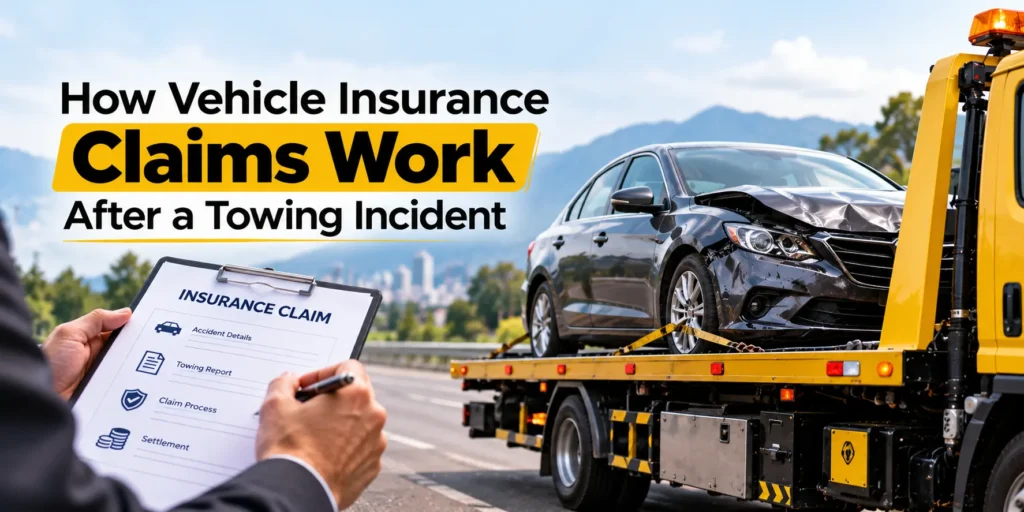
A towing incident can leave you with two problems instead of one. First, there is the original reason your vehicle needed recovery. Then, after the car reaches the workshop or another safe location, you may notice a scratch, dent, broken part, or another issue that was not there before.
At that point, many drivers are unsure what to do next.
Should you contact the towing company? Should you call your insurance provider? Do you need photographs? What happens if the vehicle was already damaged before it was towed?
The right response is to slow down, record the vehicle’s condition, and establish what happened as clearly as possible. This guide explains the practical steps to take after a towing-related incident, with a focus on vehicle owners in Pakistan.
1. When Can Towing Lead to an Insurance Question?
Not every vehicle that is towed has an insurance problem.
A car may simply need transportation because of a mechanical breakdown, a flat tyre, an engine problem, or another fault that prevents it from being driven safely. In other situations, the vehicle may already have substantial damage because of a road accident.
The insurance question usually becomes important when additional damage is noticed during or after recovery.
For example, imagine a car that has been involved in a collision. The front bumper was already damaged before the tow truck arrived. After the vehicle reaches the workshop, the owner notices a fresh mark on the side panel.
The owner now has to distinguish between the original accident damage and the newly noticed damage.
That is why the condition of the vehicle before and after transportation matters.
Madadgar’s Car Towing Service provides vehicle transportation and recovery assistance. For vehicles that cannot be moved safely after a breakdown or accident, its Car Recovery Service is another relevant option.
2. Is Towing Damage Automatically Covered by Insurance?
No single answer applies to every vehicle.
Insurance protection is determined by the particular policy and the circumstances surrounding the loss. A roadside towing benefit, for example, is not necessarily the same thing as cover for physical damage to the vehicle.
If damage appears after a vehicle has been transported, the insurer may need to establish:
- What happened before the tow
- Why the vehicle was being transported
- What condition it was in beforehand
- What damage is being reported now
- Whether another party may have caused the damage
- What evidence is available
SECP’s insurance guidance advises policyholders to notify their insurer as early as possible, provide relevant details, be truthful about the circumstances, and submit documents that support the claim.
So, rather than assuming that a particular repair will be paid for, check your policy and speak with your insurer about the specific incident.
3. Check the Vehicle Before Accepting Delivery
If you are present when the vehicle arrives, take a few minutes to look around it before the recovery vehicle leaves.
You do not need specialist mechanical knowledge.
Look for anything that appears different from the condition in which the vehicle was collected.
Pay attention to:
- Bumpers
- Doors and side panels
- Mirrors
- Lights
- Wheels and tyres
- Underbody areas
- Visible scratches or dents
- Parts that appear loose or displaced
If the vehicle was already damaged because of an accident, remember which areas were affected before recovery.
For a vehicle being transported rather than recovered from an accident, taking photographs before loading can be particularly useful.
Madadgar describes its towing service as using trained professionals and appropriate equipment for vehicle transportation.
4. What to Photograph After a Towing Incident
Photographs can provide a useful record of the vehicle’s condition.
Do not photograph only the damaged section.
Start with wider pictures showing the complete vehicle. Then take closer photographs of every area that appears to have been affected.
Useful photographs include:
- Front and rear views
- Both sides of the vehicle
- The roof and visible upper surfaces
- Wheels and tyres
- Close-ups of scratches, dents or broken components
- The towing equipment
- The tow truck
- The location where the vehicle was unloaded
If possible, keep the original image files rather than relying only on screenshots or compressed social-media copies.
The goal is not to prove a conclusion before anyone investigates. The goal is to preserve a clear record of what you actually found.
5. Contact Your Insurance Company
Once you have recorded the condition of the vehicle, contact your insurer if you believe the incident may fall within your insurance coverage.
Explain the sequence in plain language.
For example:
The vehicle was collected because it could not be driven. After it arrived at the destination, I noticed damage that I had not previously observed.
That is more useful than making an unsupported statement about who caused the damage.
Your insurer may ask questions about:
- The original reason for towing
- The vehicle’s previous condition
- The towing company
- Collection and delivery locations
- When the vehicle was collected
- When the damage was noticed
- Photographs
- Repair estimates
- Other supporting documents
SECP specifically advises policyholders to inform insurers as early as possible and provide the details and documents that support the claim.
If the matter involves an insurance surveyor, SECP also regulates the licensing of insurance surveyors, including motor-related classes of surveying.
6. Keep the Right Documents
A towing-related insurance matter can involve several parties, so keeping your paperwork together is worthwhile.
Save:
- Your insurance policy or policy schedule
- Vehicle registration documents
- Driving licence
- CNIC or other identification, where requested
- Towing receipt or booking details
- Photographs and videos
- Accident documentation, if relevant
- Repair estimates
- Previous repair records
- Any correspondence with the insurer
- Any written communication with the towing provider
- Your insurance claim reference number
The exact documents required can vary between insurers and claim types. Therefore, use your insurer’s checklist rather than assuming that every claim requires the same paperwork.
7. How an Insurer May Assess the Damage
An insurer needs to establish whether the reported loss is consistent with the circumstances of the incident.
That can involve looking at the vehicle, photographs, previous damage, repair estimates, and other information connected with the event.
Consider two different situations.
Situation One: Existing Accident Damage
The car already has a badly damaged front bumper when it is recovered from an accident.
The insurer is unlikely to treat that original bumper damage as something caused by the later towing journey.
Situation Two: Newly Discovered Damage
The vehicle had no visible damage to a particular side panel before transportation, but a fresh dent is noticed after delivery.
That creates a different question. The insurer may need more information about the vehicle’s condition before transportation and what happened during the journey.
This is why honest reporting and good records are so important.
8. When the Towing Company May Be Involved
Insurance is not always the only issue.
If you believe damage happened while a vehicle was being loaded, transported, or unloaded, the towing provider may also need to be informed.
Keep the conversation factual.
Instead of immediately accusing someone, explain:
- What the vehicle looked like before recovery
- What you noticed afterward
- Where the new damage is located
- When you discovered it
- What photographs or other evidence you have
Madadgar states on its website that it offers damage-free vehicle handling and insurance cover for vehicles in its care, with coverage stated at up to Rs. 50 lakh.
If you believe your vehicle was damaged while it was in Madadgar’s care, contact the company through its official contact page and provide the relevant details and evidence so the matter can be reviewed.
9. What Can Make a Claim Difficult?
Some situations are simply harder to establish than others.
The Vehicle Was Already Heavily Damaged
When a vehicle has suffered an accident, separating old damage from new damage may be difficult.
There Are No Before-Photos
Without a record of the vehicle’s earlier condition, it can be harder to compare what changed.
The Damage Is Reported Much Later
A long gap between delivery and reporting can make the timeline less clear.
The Cause Is Uncertain
If you only discovered the damage later and did not see how it happened, avoid presenting assumptions as facts.
Repairs Have Already Been Completed
If the vehicle is repaired before it can be inspected, evidence of its original post-incident condition may be lost.
These situations do not automatically mean a claim will fail. They simply mean that clearer evidence may be needed.
10. CAT: A Simple Reminder for Drivers
When something goes wrong with a vehicle, people often focus on getting the car repaired as quickly as possible.
Before doing that, remember CAT.
C — Capture
Take photographs and videos of the vehicle’s condition.
A — Alert
Inform the relevant insurer and towing provider promptly when appropriate.
T — Track
Keep your receipts, claim number, photographs, messages, estimates, and other records together.
| Step | What to Remember |
| Capture | Record the vehicle’s condition |
| Alert | Notify the relevant parties |
| Track | Keep all supporting information |
It is a simple system, but it can prevent important details from being forgotten when you are dealing with an already stressful situation.
11. How Professional Towing Can Reduce the Risk
The safest time to think about towing damage is before the vehicle is loaded.
Professional recovery depends on selecting suitable equipment, positioning the vehicle correctly, securing it properly, and transporting it with appropriate care.
Madadgar says its Car Towing Service uses well-maintained equipment and trained professionals. Its Vehicle Recovery Service also covers breakdowns, accidents, and roadside emergencies.
For vehicles that cannot safely be driven, professional recovery can therefore be preferable to attempting an improvised solution.
12. What to Do If Your Vehicle Is Stranded
If your vehicle has broken down or has been involved in an accident, safety should come before paperwork.
Move yourself and passengers to a safe location when possible, especially if the vehicle is stopped in a dangerous position.
Once you are safe:
- Contact an appropriate recovery service.
- Share your location accurately.
- Explain what happened to the vehicle.
- Mention any visible damage.
- Take photographs if it is safe to do so.
- Keep the towing details.
- Contact your insurer when the situation requires a claim.
Madadgar provides towing and recovery services and lists coverage in Islamabad, Lahore, Karachi, Rawalpindi, Peshawar, and major motorways.
For motorway incidents specifically, see Madadgar’s Motorway Recovery Service.
For general recovery needs, its Vehicle Recovery Service is another relevant option. You can also review the full range of Madadgar Services.
13. Final Thoughts
A damaged vehicle after towing can create confusion, particularly when the car already had problems before it was recovered.
The best response is not to guess who is responsible.
Start with the facts.
Record the vehicle’s condition, keep the towing information, notify the appropriate parties, and follow your insurer’s instructions. If the damage occurred while the vehicle was in a towing company’s care, give that provider an opportunity to review the incident as well.
Most importantly, remember that insurance coverage is determined by the individual policy and circumstances of the loss. Madadgar can provide towing and recovery assistance, but decisions about an insurance claim ultimately depend on the relevant insurer and policy terms.
14. Frequently Asked Questions
Does insurance cover damage that happens during towing?
It may, but there is no universal answer. Coverage depends on the policy and the circumstances surrounding the damage. Speak with your insurer before assuming that a particular repair is covered.
What should I do if I notice new damage after my car is towed?
Take photographs, keep the towing information, note when you discovered the damage, and contact the relevant insurer and towing provider where appropriate.
Should I repair the vehicle immediately?
If possible, contact the insurer first and ask whether an inspection or assessment is required before major repairs are carried out.
What if my car was already damaged before towing?
Explain the original damage separately from anything you noticed afterward. Photographs taken before and after recovery can help establish the difference.
Do I need a towing receipt for an insurance claim?
Your insurer may request evidence of the towing service and related circumstances. Keep the receipt or booking information rather than discarding it.
What if I believe the tow truck caused the damage?
Record what you found and when you found it. Contact the towing provider and your insurer where appropriate, and allow the relevant parties to review the available evidence.
Does Madadgar provide insured vehicle handling?
Madadgar states on its website that vehicles in its care are insured up to Rs. 50 lakh and that it provides damage-free handling. For details relating to a particular incident, contact Madadgar directly.
15. Need Professional Towing or Recovery?
A breakdown or accident is stressful enough. Choosing a professional recovery service can help you get the vehicle to a safer location without attempting an unsafe workaround.
Madadgar provides towing and recovery services, including Car Towing Service, Car Recovery Service, Vehicle Recovery Service, and Motorway Recovery Service.
Need help now? Visit Contact Madadgar for assistance.
Stay safe, record the condition of your vehicle, and deal with the insurance side using clear evidence rather than assumptions.