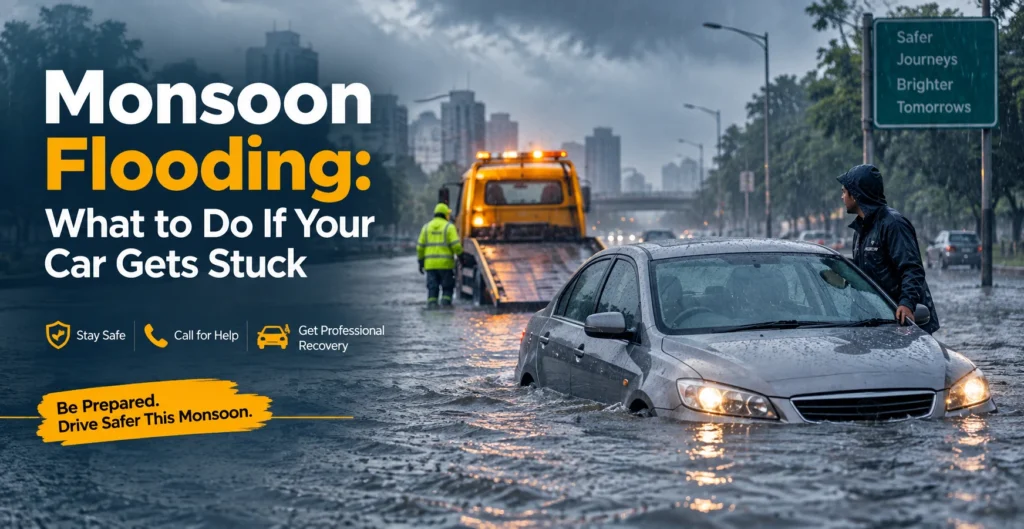
Monsoon rain can change road conditions within minutes. A route that looks completely normal at the start of a journey can quickly become covered with water, especially around low-lying streets, underpasses, poorly drained roads, and areas affected by heavy rainfall.
Getting a car stuck in floodwater is frightening, but panicking or trying to force the vehicle through the water can make the situation worse. Knowing what to do can help protect both you and your vehicle.
Here are the most important steps to follow if your car gets stuck during monsoon flooding.
1. Stay Calm and Check the Situation
Monsoon rain can turn a normal road into a flooded route within a short time. Water may collect quickly in low-lying areas, underpasses, streets, and poorly drained roads.
If your car gets stuck in floodwater, the first thing you need to do is stay calm. Do not immediately press the accelerator or attempt to force the vehicle forward.
Look around and assess:
- How quickly is the water rising?
- Is the water moving or relatively still?
- Can you see the road ahead?
- Are there other vehicles or people nearby?
- Is there higher ground close to your location?
Your first priority should always be the safety of everyone inside the vehicle.
2. Stop Trying to Drive Through Deep Water
Floodwater can be much deeper than it appears from inside the car. It can hide potholes, broken sections of road, open drains, debris, or damaged road surfaces.
Trying to push through deep water can also allow water to enter the engine through the air intake. This can result in serious mechanical damage.
If the water level is already high or you cannot judge the depth of the road, do not continue driving.
A few extra minutes of waiting is better than turning a difficult situation into an expensive vehicle recovery.
If your vehicle is already stuck or cannot be driven safely, professional car recovery service may be more appropriate than trying to force the vehicle through the flooded area. Madadgar specifically lists flooded roads and vehicles stuck in mud or water among situations where recovery may be required.
3. Turn Off the Engine If Water Is Rising
If your vehicle is stationary and floodwater is continuing to rise, avoid keeping the engine running unnecessarily.
A vehicle that has already stalled in water should not be repeatedly restarted. Repeated attempts can make mechanical damage worse if water has entered the engine.
Instead:
- Stop accelerating.
- Put the vehicle in a safer position only if it can be moved without entering deeper water.
- Turn off the engine when appropriate.
- Keep your phone accessible.
- Prepare to contact professional recovery assistance.
Do not risk damaging the engine simply because you want to move the car a few more metres.
4. Keep Your Hazard Lights On
If your vehicle is stopped on a flooded road and the electrical system is still working, switch on the hazard lights.
This can help make your vehicle more visible to other drivers, particularly during heavy rain, poor visibility, or nighttime conditions.
However, hazard lights do not make it safe to remain in a dangerous location. If the water is rising rapidly or the vehicle is being pushed by moving water, focus on reaching a safer position.
Keep your mobile phone charged whenever possible during the monsoon season so you can contact emergency or recovery services when needed.
5. Do Not Open the Door Immediately
When floodwater surrounds a vehicle, opening the door may allow water to enter the cabin quickly. External water pressure can also make doors difficult to open.
Before attempting to exit, assess the situation carefully.
If the vehicle is stable and the water level is not rapidly increasing, remain calm while arranging assistance. If the situation becomes dangerous, use the safest available exit.
Keep in mind that floodwater may contain mud, debris, broken glass, or other hazards that are not visible from inside the vehicle.
6. Leave the Vehicle Only When It Is Safer
There are situations where staying inside a vehicle can become more dangerous than leaving it. Rapidly rising water can turn a stranded vehicle into a serious safety hazard.
If you need to leave:
- Take your phone with you.
- Avoid carrying unnecessary belongings.
- Move toward higher and safer ground.
- Stay away from fast-moving water.
- Do not walk through water when you cannot judge its depth.
- Keep children and passengers together.
- Avoid electrical hazards and damaged infrastructure.
Never assume that shallow-looking floodwater is harmless. Moving water can be surprisingly powerful, while submerged hazards may be impossible to see.
Your priority is getting yourself and your passengers somewhere safe, not protecting the vehicle at all costs.
7. Never Restart a Flooded Car
One of the most important things to remember after a flood is do not restart the engine simply because the water level has gone down.
Floodwater can affect more than the engine. It may reach:
- Electrical wiring
- Battery connections
- Braking components
- Transmission
- Air intake
- Sensors
- Fuel system
- Interior electronics
Even if the car appears normal from the outside, water may have reached components that require professional inspection.
Madadgar’s car towing service explains that towing can be required when a vehicle becomes unsafe or impossible to drive, including after mechanical problems, accidents, and other roadside emergencies.
If your vehicle stalled in floodwater, arrange for it to be recovered and inspected before attempting to drive it again.
8. Call a Professional Car Recovery Service
Once you and your passengers are in a safe position, contact a professional vehicle recovery or towing service.
Tell the recovery team:
- Your exact location
- Vehicle make and model
- Whether the engine is running or stalled
- Approximate water level
- Whether the car is completely stuck
- Whether passengers have already moved to safety
This information can help the recovery team understand what equipment may be needed.
Professional recovery is particularly important when a vehicle is stuck in mud, deep water, a ditch, or a location where attempting to pull it out yourself could cause further damage.
Madadgar’s vehicle recovery service covers roadside situations where vehicles cannot safely continue under their own power, including vehicles stuck in difficult conditions.
Stay safe. Avoid flooded roads. Get professional help when you need it.
9. What to Check After the Flood
Getting the vehicle out of the water does not mean the problem is over.
Before driving the car normally, have it properly inspected. A professional mechanic should check the systems that may have been exposed to water.
Important areas to inspect include:
- Engine and air intake
- Engine oil
- Transmission fluid
- Brakes
- Battery
- Electrical wiring
- Fuses and sensors
- Tires and wheels
- Suspension components
- Interior carpets and seats
If floodwater was dirty or contaminated, the interior should also be cleaned and dried properly.
Do not ignore unusual sounds, warning lights, electrical problems, or changes in braking performance after a flood.
If the vehicle needs to be transported after inspection, Madadgar’s services page provides an overview of its towing and recovery options.
10. How to Reduce the Risk of Getting Stuck
You cannot control how much rain falls, but you can make better decisions before and during a monsoon journey.
Before driving:
- Check weather and road conditions.
- Keep your phone charged.
- Carry basic emergency equipment.
- Make sure your tires have adequate tread.
- Check your brakes and windshield wipers.
- Keep your recovery or towing contact available.
While driving:
- Reduce your speed during heavy rain.
- Maintain extra distance from other vehicles.
- Avoid roads that are already heavily flooded.
- Do not follow another vehicle blindly into deep water.
- Avoid unnecessary travel during severe flooding.
- Be especially careful around underpasses and low-lying roads.
The safest flood crossing is often the one you decide not to make.
If you want to understand the cost factors involved when professional towing is required, Madadgar’s Car Towing Service Charges in Pakistan guide explains how factors such as distance, vehicle type, and equipment can affect towing charges.
Need Emergency Vehicle Recovery?
If your car has become stuck in floodwater, do not put yourself at risk by trying to recover it alone.
Need professional towing or vehicle recovery? Contact Madadgar for assistance when your vehicle cannot safely continue.
11. Frequently Asked Questions (FAQs)
1. What should I do if my car gets stuck in floodwater?
Stay calm, stop trying to drive through deep water, and assess whether the water is rising. If the situation becomes unsafe, move yourself and your passengers to a safer location and contact professional recovery assistance.
2. Should I restart my car after it stalls in floodwater?
No. Avoid repeatedly restarting a vehicle that has stalled in floodwater. Water may have entered the engine or other mechanical components, and restarting it could cause further damage.
3. Is it safe to drive through flooded roads?
It is safest to avoid flooded roads when the depth or condition of the road cannot be clearly determined. Floodwater can hide potholes, drains, debris, and damaged road surfaces.
4. What if water starts entering my car?
Stay calm and assess the safest way to exit. If the water is rising quickly, do not waste time collecting belongings. Move toward higher ground when it is safe to do so.
5. Can floodwater damage a car even if the engine is still working?
Yes. Floodwater can affect electrical systems, brakes, transmission components, sensors, wiring, and other parts even when the engine initially appears to be working normally.
6. Should I try to push or pull my car out of floodwater?
Avoid attempting an unsafe recovery yourself. A professional recovery operator can determine the appropriate equipment and recovery method while reducing the risk of additional damage.
7. What should I tell a towing service when calling for help?
Provide your exact location, vehicle type, current condition, whether the engine has stalled, and information about the surrounding floodwater. Clear information can help the recovery team prepare appropriately.
8. Can I drive my car after the floodwater goes down?
Do not assume the vehicle is safe simply because the water has receded. Have the car inspected, particularly if it was partially or completely submerged or the engine stalled in water.
9. What emergency items should I keep in my car during monsoon season?
A charged power bank, flashlight, first-aid kit, warning triangle, basic tools, drinking water, and emergency contact information can be useful. Keeping a reliable towing contact saved in your phone is also a good precaution.
10. Does Madadgar provide vehicle recovery during emergencies?
Madadgar’s website states that it provides 24/7 towing and vehicle recovery assistance across major cities and motorways in Pakistan. Its recovery services include assistance for breakdowns, accidents, stuck vehicles, and other roadside emergencies.
12. Conclusion
Monsoon flooding can become dangerous before a driver realizes how quickly conditions have changed. If your car gets stuck, do not panic and do not keep forcing it through rising water.
Stop, assess the situation, protect yourself and your passengers, and avoid restarting a vehicle that has stalled in floodwater. Once everyone is safe, contact a professional recovery service to handle the vehicle.
Remember, your car can be repaired, but your safety comes first.
Being prepared before the monsoon arrives can make a major difference when an unexpected roadside emergency occurs.