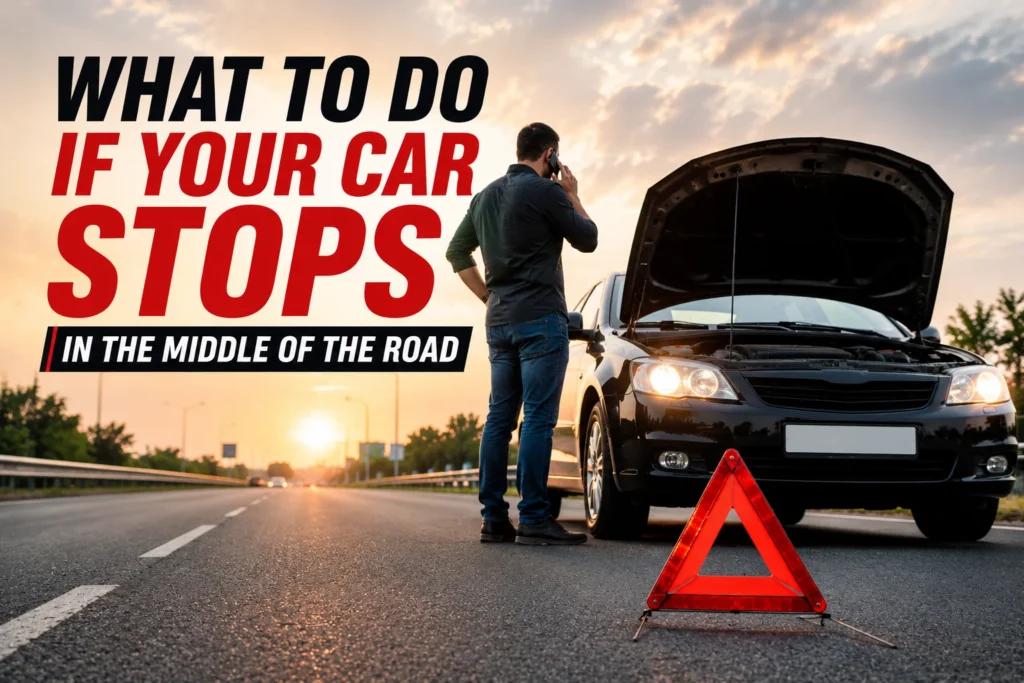
Imagine you’re driving to work in Karachi, heading home in Lahore after a long day, or traveling on the motorway between cities when suddenly your car loses power and comes to a stop in the middle of the road. The traffic behind you starts building up, drivers begin honking, and your stress levels instantly shoot through the roof.
A vehicle breakdown can happen to anyone, regardless of how well you maintain your car. The key is knowing how to react calmly and safely. Taking the right steps during those first few minutes can protect you, your passengers, and other road users while helping you get assistance quickly.
In this guide, we’ll explain exactly what to do if your car stops in the middle of the road and how to handle the situation like a pro.
Stay Calm and Focus on Safety First
The moment your vehicle starts slowing down unexpectedly, don’t panic.
Many drivers make rushed decisions when faced with a roadside emergency, which can often make the situation worse. Instead, take a deep breath and focus on maintaining control of your vehicle.
Keep both hands on the steering wheel and observe your surroundings. Check your mirrors and stay aware of nearby traffic.
Remember, your first priority is not fixing the car,it’s keeping yourself and others safe.
Turn On Your Hazard Lights Immediately
One of the first things you should do is activate your hazard warning lights.
Hazard lights alert other drivers that your vehicle is experiencing problems and help them react in time. This simple action can significantly reduce the risk of accidents, especially on busy roads, intersections, and highways.
If it’s nighttime, raining, foggy, or visibility is poor, hazard lights become even more important.
Think of them as your vehicle’s way of saying:
“Something is wrong. Please proceed with caution.”
Move Your Vehicle to a Safe Spot If Possible
If your car still has some momentum or limited power, try to steer it toward a safe area.
Good places to stop include:
- The shoulder of the road
- Emergency lanes
- Petrol stations
- Service roads
- Nearby parking areas
The farther you can safely move away from active traffic, the better.
However, never risk causing another accident by making sudden turns or dangerous lane changes. If the vehicle cannot move safely, keep it where it is and focus on warning other drivers.
Make Your Vehicle Visible
A disabled vehicle can quickly become a hazard for approaching traffic.
Once you’ve stopped safely, take additional steps to improve visibility.
Use Warning Equipment
If you carry a reflective warning triangle, place it behind your vehicle at a safe distance.
This gives approaching drivers extra time to slow down or change lanes.
Keep Your Lights On
Maintain your hazard lights and, if necessary, use parking lights during low-visibility conditions.
Wear Reflective Clothing
If you have a reflective safety vest, wear it before exiting the vehicle.
These small precautions can make a huge difference, especially on Pakistan’s busy highways and motorways.
Move Yourself and Passengers to Safety
Many people make the mistake of standing beside their vehicle while waiting for help.
Unfortunately, this can be extremely dangerous.
If it’s safe to leave the vehicle:
- Exit from the side away from traffic.
- Move passengers to a safe location.
- Stay behind safety barriers when available.
- Keep children close and away from moving vehicles.
On motorways and high-speed roads, staying near traffic lanes should be avoided whenever possible.
Your safety is always more important than your vehicle.
Try to Identify the Problem
Once everyone is safe, take a moment to assess what might have caused the breakdown.
While you may not be able to fix the issue yourself, understanding the problem can help when speaking with a recovery service.
Common Causes of Vehicle Breakdowns
Dead Battery
A weak battery can leave your car unable to start or operate properly.
Engine Overheating
Steam coming from under the bonnet is often a sign of overheating.
Flat Tire
A punctured tire can make driving unsafe and may require roadside assistance.
Fuel Problems
Running out of fuel or experiencing fuel system issues can cause sudden engine failure.
Mechanical or Electrical Faults
Problems with the alternator, transmission, engine, or electrical system can stop your vehicle without warning.
Avoid attempting major repairs on a busy roadside unless you have the proper knowledge and equipment.
Contact a Reliable Car Recovery Service
If your vehicle cannot be restarted safely, it’s time to call a professional car recovery service.
Attempting to tow a vehicle improperly can lead to further damage and additional expenses.
Professional recovery operators have specialized equipment designed to transport vehicles safely and efficiently.
When requesting assistance, provide:
- Your exact location
- Nearby landmarks
- Vehicle make and model
- Nature of the problem
- Contact number
The more information you provide, the faster help can reach you.
Keep an Emergency Kit in Your Vehicle
One of the smartest habits any driver can develop is carrying a roadside emergency kit.
A well-prepared emergency kit should include:
- Reflective warning triangle
- Flashlight
- First-aid supplies
- Jumper cables
- Portable phone charger
- Basic toolkit
- Drinking water
- Emergency contact numbers
Being prepared can save valuable time and reduce stress during unexpected breakdowns.
Conclusion
Having your car stop in the middle of the road is never convenient, but it doesn’t have to become a dangerous situation. By staying calm, activating your hazard lights, moving to a safe location when possible, and contacting a trusted car recovery service, you can protect yourself and get back on track quickly.
Roadside emergencies are unpredictable, but preparation and quick thinking can make all the difference. Every driver in Pakistan should know these essential safety steps before they ever need them. Contact Madadgar Recovery Service For Quick Help.
Frequently Asked Questions
1. What is the first thing I should do if my car breaks down?
Turn on your hazard lights immediately and focus on moving your vehicle to a safe location if possible.
2. Should I stay inside my car after a breakdown?
If traffic conditions make it unsafe to exit, remain inside with your seatbelt fastened until help arrives.
3. When should I call a towing or recovery service?
Call a professional recovery service whenever your vehicle cannot be restarted safely or requires transportation to a workshop.
4. Can a dead battery cause my car to stop suddenly?
Yes, battery and electrical system failures can cause vehicles to lose power unexpectedly.
5. What should every driver keep in an emergency kit?
A warning triangle, flashlight, first-aid kit, jumper cables, portable charger, and emergency contact information are highly recommended.
Call to Action
Need emergency towing or vehicle recovery? Trust Madadgar for fast, reliable 24/7 roadside assistance across Pakistan. Visit Madadgar Recovery Service and get back on the road with confidence.