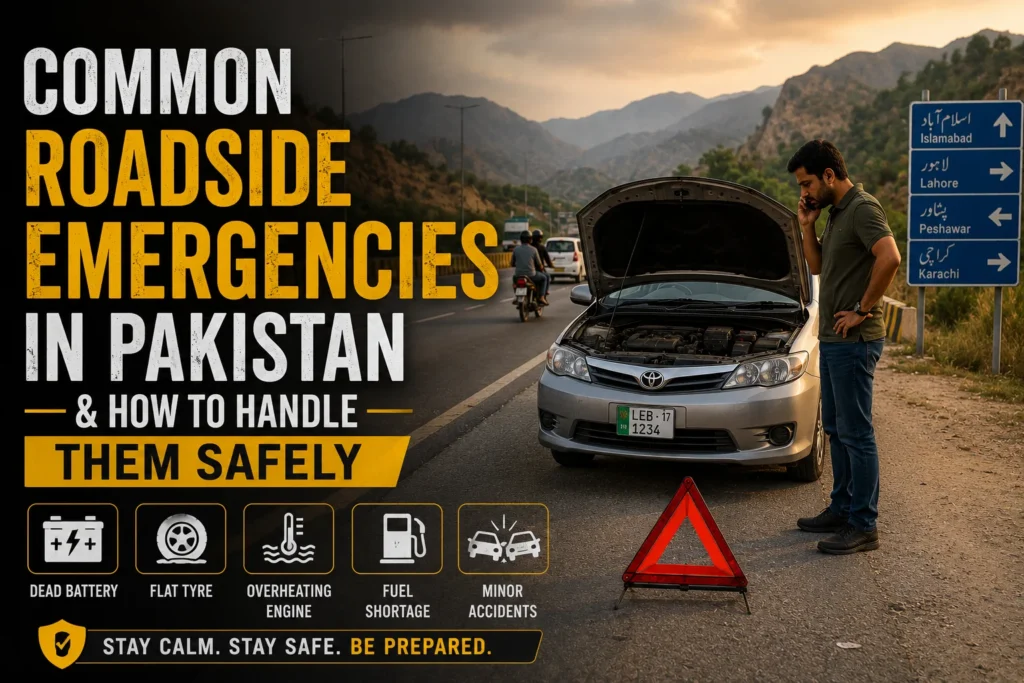
Have you ever faced a flat tire, overheated engine, or dead battery while traveling on Pakistan’s roads? Roadside emergencies can happen anytime, whether you are driving in crowded cities or on long highways. Poor road conditions, heavy traffic, and extreme weather often increase the chances of vehicle breakdowns. Knowing how to react calmly and safely during these situations can save you from stress, delays, and costly repairs. Every driver should be prepared for common roadside problems before starting a journey.
In this guide, you’ll learn about the most common roadside emergencies in Pakistan and the safest ways to handle them effectively.
Flat Tire – The Most Common Roadside Problem
A flat tire is one of the most frequent roadside emergencies faced by drivers in Pakistan. Sharp objects, potholes, and worn-out tires are usually the main reasons behind punctures.
How to Handle a Flat Tire Safely
- Move your vehicle to a safe side of the road.
- Turn on hazard lights immediately.
- Use a warning triangle if available.
- Replace the damaged tire with the spare tire carefully.
- If you are unsure how to change a tire, call a professional roadside assistance service.
Prevention Tips
- Check tire pressure regularly.
- Avoid driving on damaged tires.
- Keep a spare tire and jack in your vehicle at all times.
Car Battery Failure
Dead batteries are especially common during extreme summer heat or winter mornings in Pakistan. Leaving headlights or electronics on can also drain the battery quickly.
Signs of a Dead Battery
- Engine won’t start
- Dim headlights
- Clicking sound when turning the key
What You Should Do
- Try jump-starting the car using jumper cables.
- Ask for help from another vehicle if possible.
- Contact a towing or roadside assistance company if the battery completely fails.
How to Avoid Battery Issues
- Replace old batteries on time.
- Turn off lights and accessories when the engine is off.
- Get your battery checked regularly by a mechanic.
Engine Overheating During Hot Weather
Pakistan’s intense summer temperatures can easily cause engines to overheat, especially during long drives or traffic jams.
Immediate Steps to Take
- Pull over safely and turn off the engine.
- Allow the engine to cool down for at least 15–20 minutes.
- Never open the radiator cap immediately.
- Check coolant levels after the engine cools.
Common Causes of Overheating
- Low coolant
- Radiator leakage
- Faulty cooling fan
- Heavy traffic conditions
Keeping extra coolant in your car can help you manage this issue temporarily until professional help arrives.
Running Out of Fuel
Many drivers underestimate fuel consumption during long-distance travel, especially on highways where petrol stations may be far apart.
What to Do If Your Car Runs Out of Fuel
- Park safely away from moving traffic.
- Turn on hazard lights.
- Contact nearby fuel delivery or roadside assistance services.
- Avoid walking alone on isolated roads at night.
Simple Prevention Tips
- Never let your fuel level drop below one-quarter.
- Plan fuel stops before long journeys.
- Use reliable fuel stations to avoid low-quality fuel problems.
Brake Failure – A Serious Emergency
Brake failure is one of the most dangerous roadside emergencies and requires immediate action.
How to React During Brake Failure
- Stay calm and avoid panic.
- Gradually release the accelerator.
- Shift to lower gears to slow the vehicle.
- Use the handbrake carefully and slowly.
- Move toward an empty roadside area.
Preventive Measures
- Get brakes inspected regularly.
- Replace brake pads on time.
- Pay attention to unusual brake noises.
Regular vehicle maintenance can significantly reduce the risk of brake failure.
Car Accidents and Vehicle Recovery
Minor and major accidents can happen anywhere due to reckless driving, poor visibility, or road conditions.
Important Safety Steps After an Accident
- Check yourself and passengers for injuries.
- Move to a safe location if possible.
- Call emergency services if needed.
- Avoid arguing or blocking traffic.
- Contact a professional recovery or towing service.
Reliable vehicle recovery services in Pakistan can safely transport damaged cars to workshops or secure locations.
Essential Emergency Items Every Driver Should Carry
Being prepared can make roadside emergencies easier to handle. Every car owner in Pakistan should keep:
- Spare tire and toolkit
- Jumper cables
- Flashlight
- First aid kit
- Portable phone charger
- Warning triangle
- Extra coolant and engine oil
- Emergency contact numbers
These small preparations can make a big difference during emergencies.
Conclusion
Roadside emergencies in Pakistan are common, but staying calm and prepared can help you handle them safely. Whether it’s a flat tire, overheating engine, dead battery, or brake failure, knowing the right steps can protect both you and your vehicle. Regular maintenance, safe driving habits, and access to reliable roadside assistance services are the best ways to avoid stressful situations on the road.
FAQs
1. What is the most common roadside emergency in Pakistan?
Flat tires are among the most common roadside problems due to poor road conditions and punctures.
2. What should I do if my car overheats?
Pull over safely, turn off the engine, and wait for it to cool before checking coolant levels.
3. Is roadside assistance available in Pakistan?
Yes, many companies offer 24/7 roadside assistance and towing services across major cities.
4. How can I prevent battery failure?
Regular battery inspections and turning off unused electronics can help prevent battery problems.
5. Why is vehicle recovery service important?
Recovery services help safely transport damaged or non-working vehicles during emergencies.
Call to Action
Whether you need emergency towing, accident recovery, car carrier services, or roadside assistance anywhere in Pakistan, Madadgar.com.pk is available 24/7 with fast, reliable, and professional support. From flat tires to vehicle breakdowns, Madadgar helps drivers stay safe on the road with quick-response towing and recovery solutions across major cities in Pakistan.