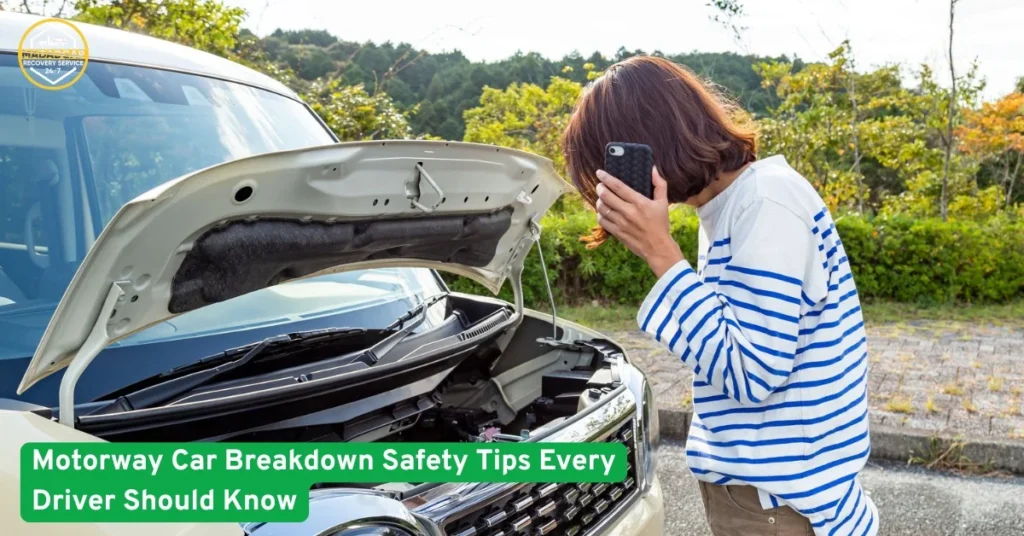
Have you ever imagined your suddenly car breakdown while driving on a high-speed motorway? It can be a frightening experience, especially when vehicles are passing by at high speed and help seems far away. In Pakistan, long motorway routes like M1, M2, and M3 connect major cities and are used daily by thousands of drivers.
While motorways are designed for smooth and safe travel, unexpected vehicle breakdowns can still happen. A dead battery, overheating engine, tire blowout, or mechanical failure can quickly turn a normal journey into a stressful situation.
Knowing how to handle a motorway Car Breakdown safely can protect you, your passengers, and other drivers on the road.
Why Motorway Breakdowns Are Riskier
Unlike city roads, motorways involve:
- High-speed traffic
- Limited stopping areas
- Long distances between service stations
- Reduced visibility at night
Because vehicles travel at high speeds, a stopped car can quickly become a serious hazard. This is why following proper safety procedures is extremely important.
1. Move Your Vehicle to the Shoulder Immediately
If your vehicle starts losing power or showing signs of failure, try to move it safely to the left shoulder of the motorway.
Do not stop in the driving lane unless it is absolutely unavoidable. Use your vehicle’s remaining momentum to reach the shoulder or emergency parking area.
This simple step greatly reduces the risk of collisions.
2. Turn On Hazard Lights
Once your vehicle stops, immediately switch on your hazard warning lights.
Hazard lights alert approaching drivers that your vehicle is stationary and allow them to slow down or change lanes safely.
Keep the hazard lights on until help arrives.
3. Stay Inside the Vehicle if It’s Safe
On high-speed motorways, standing outside your vehicle can be dangerous.
If the vehicle is safely positioned on the shoulder and there is no fire or smoke, it is usually safer to remain inside the car with your seatbelt fastened.
Passengers should avoid standing near traffic lanes.
4. Use Warning Triangles if Available
If it is safe to exit the vehicle, place a warning triangle behind the car to alert approaching traffic.
Recommended placement:
- At least 45–60 meters behind the vehicle
This gives drivers enough time to react and move away from your lane.
5. Call for Professional Roadside Assistance
Trying to fix serious mechanical issues on a motorway can be risky.
Instead of attempting repairs yourself, it’s safer to call a professional towing or roadside assistance service. Trained recovery teams can safely transport your vehicle to the nearest service station or workshop.
Quick professional help also reduces the time your vehicle remains exposed to motorway traffic.
6. Avoid Standing Near Traffic
Many accidents happen when drivers stand too close to the road while waiting for help.
If you must exit the vehicle, stand away from the traffic side and remain alert to passing vehicles.
Your safety should always come before inspecting the vehicle.
7. Prepare an Emergency Kit
Preparation can make a huge difference during roadside emergencies. Every motorway driver should keep a basic emergency kit in the car, including:
- Warning triangle
- Flashlight
- Phone charger or power bank
- First aid kit
- Basic tools
- Drinking water
Having these items can make unexpected breakdowns easier to manage.
Why Preparation Matters on Pakistani Motorways
Motorways in Pakistan often involve long travel distances between cities, which means help may not always be immediately nearby.
Additionally:
- Extreme summer heat can affect engines and batteries
- Tire blowouts are common during long journeys
- Night driving reduces visibility
Being prepared and knowing the correct safety steps can prevent a stressful situation from becoming a dangerous one.
Conclusion
A motorway car breakdown can happen to anyone, but knowing how to respond calmly and safely makes all the difference. By moving your vehicle to the shoulder, using hazard lights, keeping a safe distance from traffic, and calling professional roadside assistance, you can significantly reduce risks.
Every driver should be prepared for unexpected situations on the road. With the right safety habits and reliable assistance, motorway travel in Pakistan can remain safe and stress-free.
FAQs
1. What should I do first if my car breaks down on the motorway?
Move the vehicle safely to the left shoulder and turn on your hazard lights.
2. Is it safe to exit the car on the motorway?
Only if necessary and when it is safe to do so. Otherwise, remain inside the vehicle with your seatbelt on.
3. Should I try to repair my car myself on the motorway?
Minor issues may be manageable, but for most problems it’s safer to call professional roadside assistance.
4. Why are motorway breakdowns more dangerous than city breakdowns?
Motorways have higher speeds and fewer stopping areas, increasing the risk of accidents.
5. Who should I call for help on Pakistani motorways?
Professional towing or roadside assistance services can safely recover your vehicle and transport it to a nearby workshop.
Call To Action
Don’t let an unexpected breakdown turn into a dangerous situation. Keep the contact number of a reliable 24/7 towing and roadside assistance service provider like Madadgar saved in your phone so help is always just one call away when you need it most.